Oops Nails nail files: comfortable work and a flawless result
A quality nail file lets the professional work faster, more precisely and more carefully. It affects not only the shape but also the final result of the manicure, the speed of work and the client's comfort. The Oops Nails online store offers professional tools with different grits, shapes and uses.
Main types of nail files by grit and material
Nail files are abrasive tools used to shorten, buff and shape nails. They differ in grit, material and shape, as they are designed for different tasks.
By design, there are two types of files:
- one-piece files: fully ready-to-use tools that can be put to work right away;
- files with replaceable abrasive sheets: they come as a base to which interchangeable filing sheets are attached.
One-piece files are suitable for home use by one person. Bases with replaceable abrasives are an excellent choice for beauty salons, as they let you quickly change the working surface and maintain a high level of hygiene.
Grit
The hardness (grit) of a tool is measured in grit numbers. The lower the number, the larger the abrasive particles and the harsher and faster the file removes material. The higher the number, the finer the abrasive and the softer and gentler the surface treatment:
- 80–100 grit: very coarse files for acrylic, gel and removing artificial material.
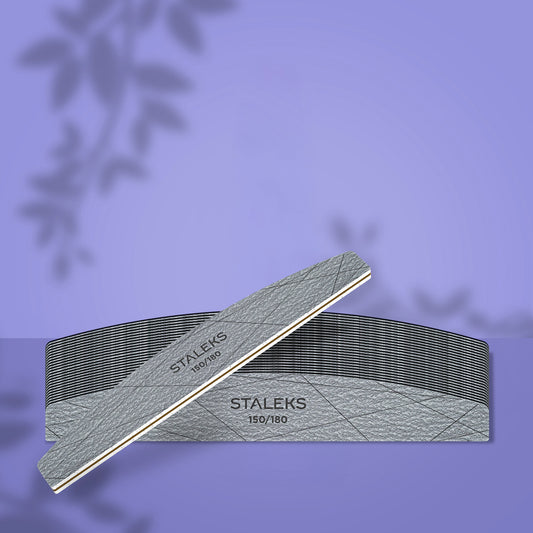
- 150–180 grit: a universal option for correcting the shape and working with dense coatings.
- 240 grit and above: soft tools for natural nails and gentle treatment.
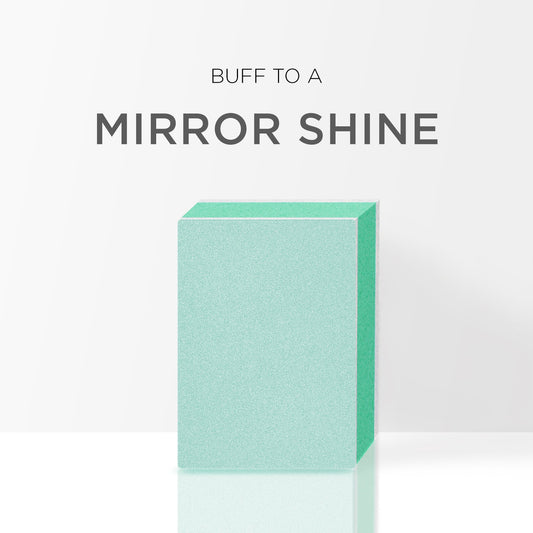
- 400–3000 grit: used to buff and polish the nail surface.
Coarse abrasives are chosen for removing gel and acrylic, universal ones for correcting the shape, and soft options for natural nails and finishing.
Materials
Depending on the material they are made of, the Oops Nails catalog features the following nail files:
- Paper: disposable products with a cardboard base and an abrasive coating.
- Metal: strong, durable tools for repeated use.
- Plastic: universal bases of medium hardness.
- Wood: used as a light, eco-friendly base, especially in disposable files or in systems with interchangeable abrasives.
When choosing a file, it is important to consider how it will be used in your work. Disposable options are practical for a quick change between clients, while metal, plastic and wooden bases are most often used in systems with interchangeable abrasives.
How to choose the right nail file
When choosing nail files at Oops Nails, pay attention not only to grit and material but also to other aspects:
- The shape of the tool. Straight models are used for versatile work. They are practical for filing the free edge, evening out the length and creating a defined shape on the flat areas of the nail. Curved products follow the natural line of the nail better and allow precise work in the cuticle area and along the side walls, reducing the risk of damaging the skin and making filing more precise and gentle.
- Foam in the base or in abrasive refills. This is the soft layer within the abrasive file, located between the abrasive layer and the base. It makes filing gentler and more comfortable. Versions without foam are harder and remove material faster, so they are suitable for more intensive work.
- Type of work. Our catalog includes models designed specifically for manicure, pedicure or specialized tasks (for example, foot care or hard-to-reach areas).
Different stages of buffing and nail treatment require files of different grits, shapes and bases. Therefore, for complete and comfortable work, a professional should have several types of files and abrasives rather than limiting themselves to a single tool.
How to use a nail file correctly
To keep the nail healthy and achieve a neat shape without splitting, the tool must be used correctly:
- Nails should be dry, as a wet nail is softer and more vulnerable to damage.
- The file is held at a slight angle to the free edge and moved in one direction only, without a back-and-forth “sawing” motion, so as not to cause peeling.
- When filing, first carefully shorten the length and then create the desired shape: square, oval or almond. Only after that, if necessary, smooth the edge with a gentler abrasive or a buffer.
Soft files are used for natural nails, and harder files for artificial nails. It is important not to press on the nail and not to file the sides too deeply so as not to weaken its structure.
Where to buy professional nail files in Spain
At the Oops Nails store you can buy professional files, abrasives and consumables for manicure and pedicure, selected for the different stages of a professional's work. In the catalog you will find only quality products from trusted brands, so all tools stand out for their durability and ease of use.
Our advantages:
- a wide range of tools and materials for manicure and pedicure;
- a catalog with an intuitive structure and a quick search for the products you need;
- transparent shipping, payment and return conditions;
- a multilingual interface for users' convenience;
- fast shipping throughout Spain and to other EU countries.
Order a nail file at Oops Nails and build your professional kit for any filing and buffing technique!